Guides
Carbon steel vs stainless Japanese knives: how should you care for them?
Miyabi workshop staff · Updated:
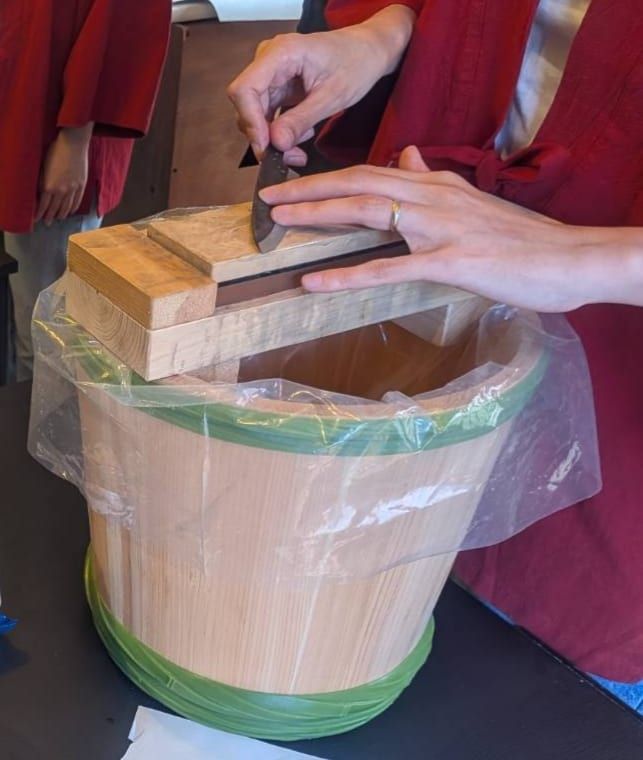
Japanese kitchen knives are made from many kinds of steel, but for everyday care they fall into two broad groups: carbon steel (often called hagane in Japanese) and stainless steel. Both can take a very sharp edge. The difference is mostly in how they react to water and air, and that changes how you look after them.
What is the difference between carbon and stainless steel?
| Carbon steel | Stainless steel | |
|---|---|---|
| Rust resistance | Low – can rust within hours if left wet | High – resists rust, but not rust-proof |
| Colour change | Develops a grey-blue or dark patina with use | Stays mostly bright |
| Sharpening | Generally easy to sharpen on whetstones | Varies by steel; some take a little longer |
| Daily care | Needs drying every time, plus light oil | Needs drying, less fussy |
Many Japanese knives are also made with layers, for example a hard core steel clad in softer steel. In that case the edge may behave like one type and the sides like another. If you are not sure what your knife is, ask the maker or the shop where you bought it.
Red rust vs black oxide: which one is a problem?
This is the most common question from new carbon-steel owners.
- Red or orange rust is the harmful kind. It eats into the steel and can pit the surface. Remove it as soon as you see it, using a rust eraser or a fine abrasive, then dry and oil the blade.
- A dark, grey or blue-black layer (patina / black oxide) forms naturally when carbon steel meets food acids and air. It is a stable layer that actually helps protect the blade from red rust. You do not need to scrub it off.
Stainless knives can still show small rust spots if they are left wet or in contact with salty or acidic food for a long time, so the same “wash and dry” habit applies.
How should I wash and dry a Japanese knife?
The basic routine is the same for both steels:
- Wash by hand with warm water and a little mild detergent, using a soft sponge.
- Rinse, then dry immediately with a clean towel, including the spine and the area near the handle.
- Never use a dishwasher. Heat, harsh detergent and knocking against other items can dull or chip the edge and damage wooden handles.
- Do not leave it soaking in the sink.
For carbon steel, it also helps to wipe the blade during cooking, especially when cutting acidic foods like tomatoes, citrus or onions.
How should I store it?
- Store the knife completely dry, in a blade guard (saya), a knife block or on a magnetic strip.
- Avoid loose drawers where the edge knocks against other utensils.
- For carbon steel, wipe a thin layer of food-safe oil (camellia oil is a traditional choice) on the blade before storing it for more than a day or two.
- If you are packing it for travel, see how to bring a Japanese knife on a plane.
Which cutting board should I use?
Use wood or plastic / synthetic rubber boards. They have a little give, which protects a thin, hard Japanese edge. Avoid glass, stone, marble or ceramic boards; they dull the edge very quickly and can chip it.
How often should I sharpen?
It depends on how much you cook, but as a general guide:
- Home cooks using the knife daily: a light touch-up on a fine stone every few weeks, and a fuller sharpening every few months.
- Occasional use: sharpen when the knife starts slipping on tomato skin or onion layers.
A Japanese knife is usually sharpened on whetstones rather than a pull-through sharpener. To understand which stones to use, read whetstone grits explained.
At Miyabi
In our knife sharpening experience, you sharpen a Japanese knife made at our own factory in Sendai, on #1000 and #6000 whetstones, then take it home in a case. Not sure which steel your knife is? Ask our staff which steel your knife is, and we will explain how to care for that specific knife.
- Knife sharpening experience – 60 minutes, from ¥10,000 per person
- FAQ